
Racket speed
Racket-head speed at ball impact.
THE CURRENT SWINGFLUX FRAMEWORK
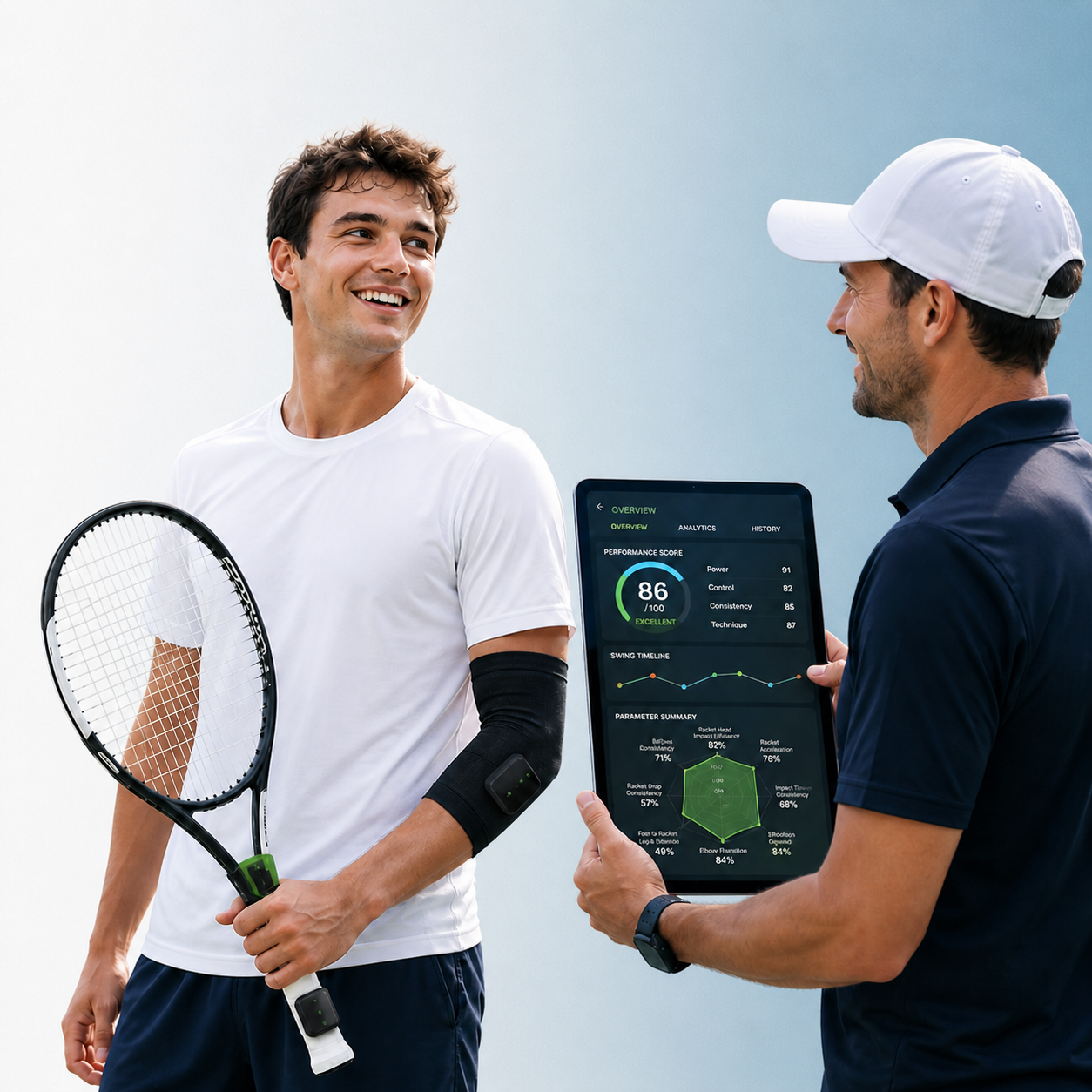
The current SwingFlux framework groups 12 coaching metrics around the serve, forehand, backhand and return of serve. The aim is to make sensor output easier to connect to recognizable technical questions.
HOW TO READ THE 48
Individual numbers are most useful when interpreted with the player's technique, task, intent and baseline. SwingFlux is designed to support the coach's decision-making rather than replace it.
SERVE
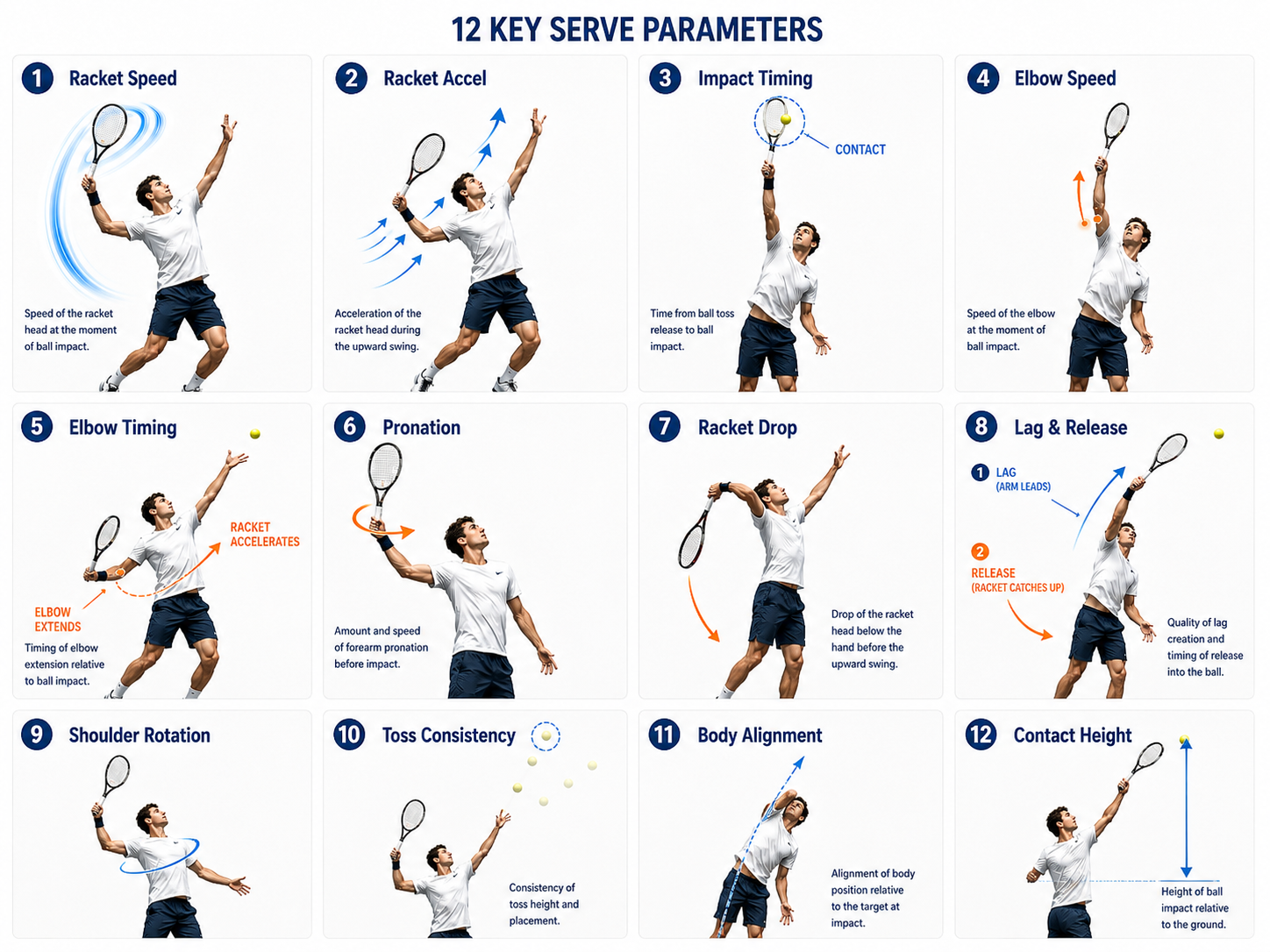
Racket-head speed at ball impact.
Acceleration of the racket head during the upward swing.
Timing of ball impact within the serve sequence.
Elbow movement speed around the impact phase.
Timing of elbow extension relative to impact.
Forearm pronation through the acceleration and impact phase.
Depth and timing of the racket-head drop before acceleration.
Creation of racket lag and the timing of release into the ball.
Rotational contribution through the serve.
Repeatability of toss height and placement.
Body orientation relative to the intended target at impact.
Height of racket-ball contact.
FOREHAND
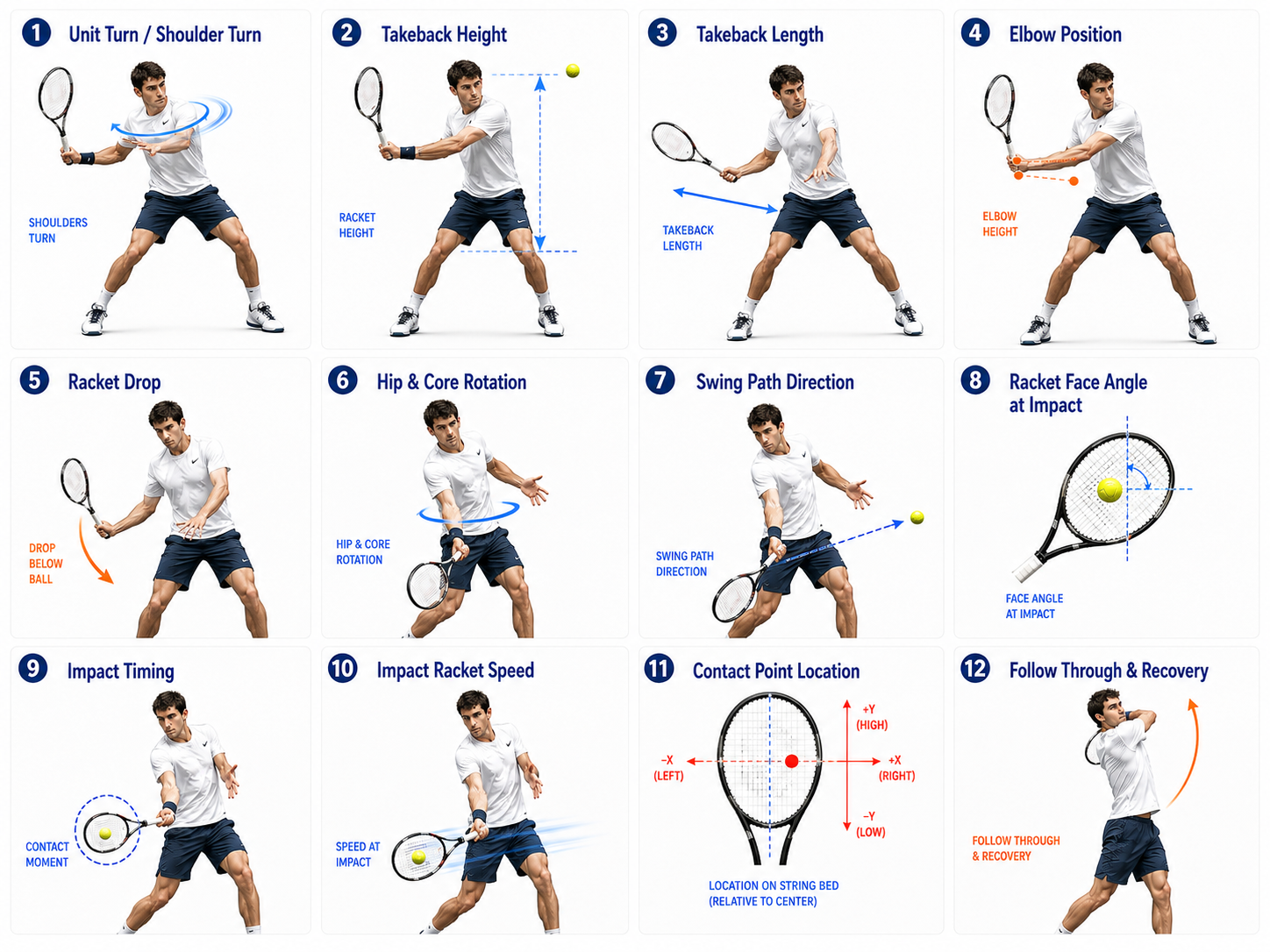
Amount and timing of shoulder turn during preparation.
Racket height during the takeback.
Length of the racket preparation path.
Elbow position during preparation and transition.
Racket-head drop before the forward swing.
Rotational contribution through the forward swing.
Direction of racket travel into impact.
Racket-face orientation at contact.
Timing of contact within the stroke sequence.
Racket speed at impact.
Where contact occurs relative to the racket/string-bed reference.
Post-impact follow-through and recovery pattern.
BACKHAND
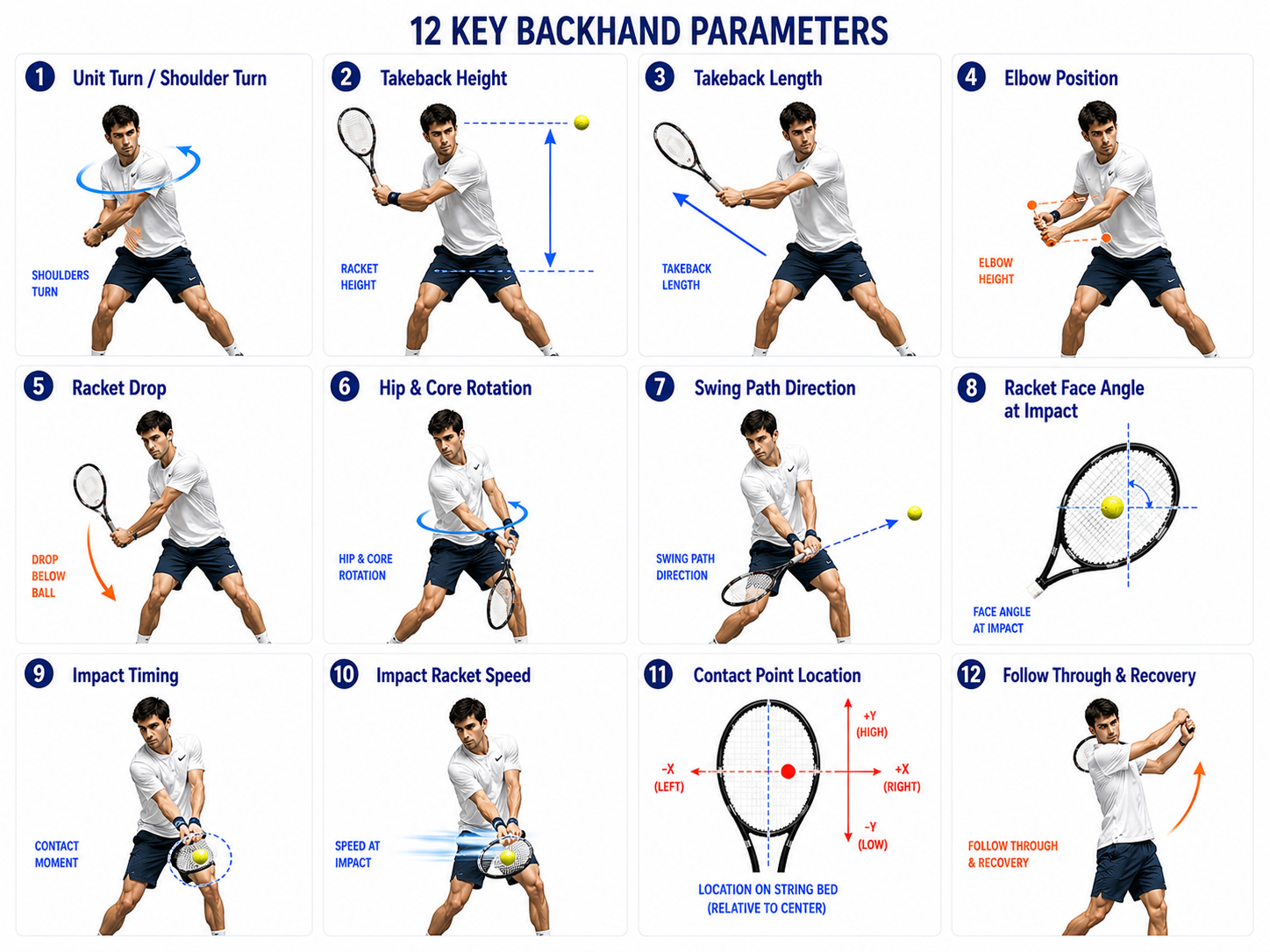
Shoulder and upper-body preparation for the backhand.
Racket height during preparation.
Length of the preparation path.
Elbow position through preparation and transition.
Racket-head drop before forward acceleration.
Rotational contribution through the stroke.
Direction of racket travel into impact.
Racket-face orientation at contact.
Timing of contact within the stroke sequence.
Racket speed at impact.
Contact location relative to the racket/string-bed reference.
Post-impact follow-through and recovery pattern.
RETURN OF SERVE
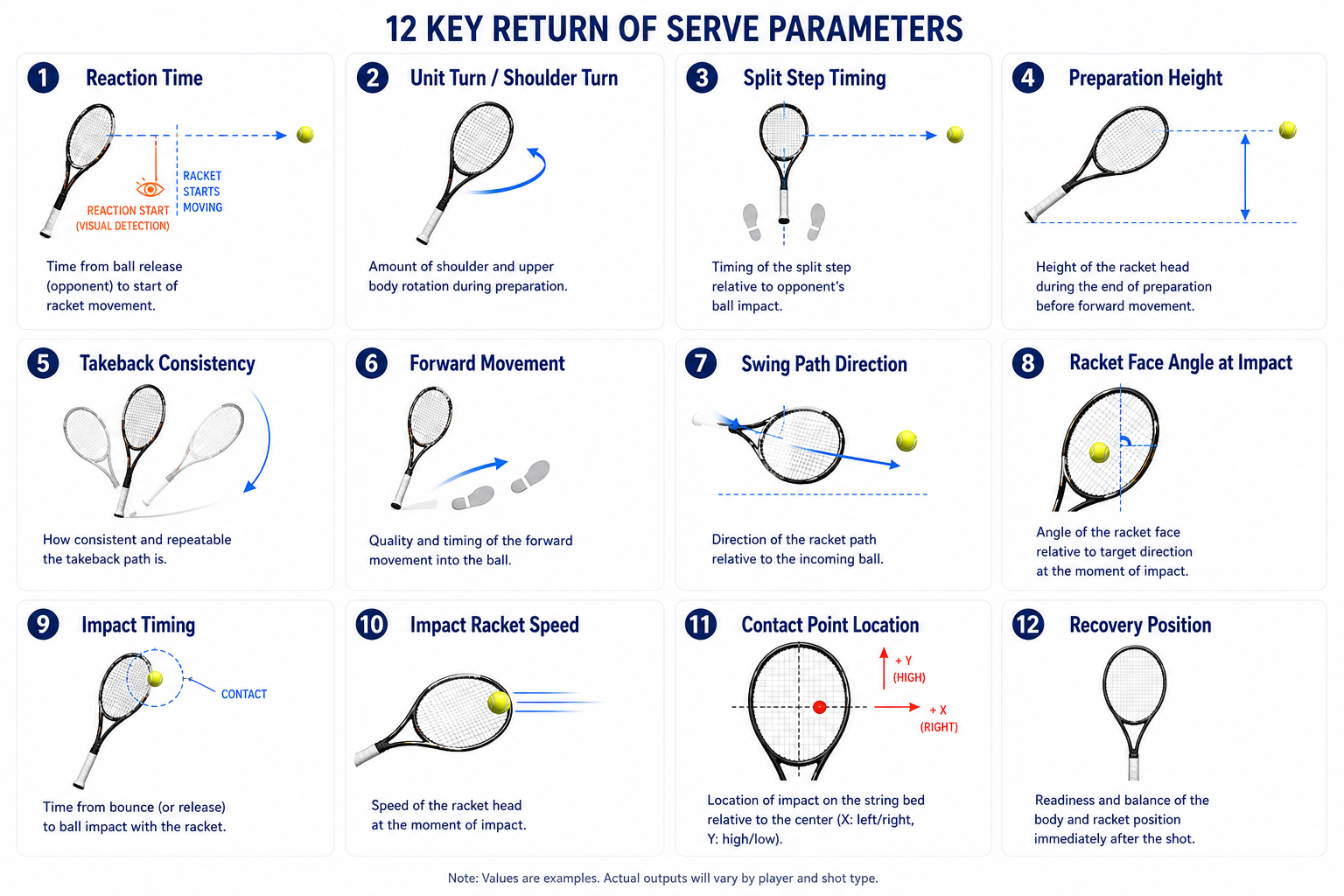
Time from the relevant serve event to initiation of the return movement.
Amount and timing of upper-body preparation.
Timing of the split step relative to the incoming serve.
Racket-head height at the end of preparation.
Repeatability of the takeback pattern.
Timing and amount of forward movement into the ball.
Racket-path direction relative to the incoming ball.
Racket-face orientation at contact.
Timing of racket-ball contact in the return sequence.
Racket-head speed at impact.
Contact location relative to the racket/string-bed reference.
Post-contact readiness and recovery pattern.
DEEPER IMPACT VIEWS
Your supplied analysis material also includes an eight-parameter impact-quality layer and racket-ball contact-location view. These are presented as deeper diagnostic layers rather than being added to the headline 48 count.
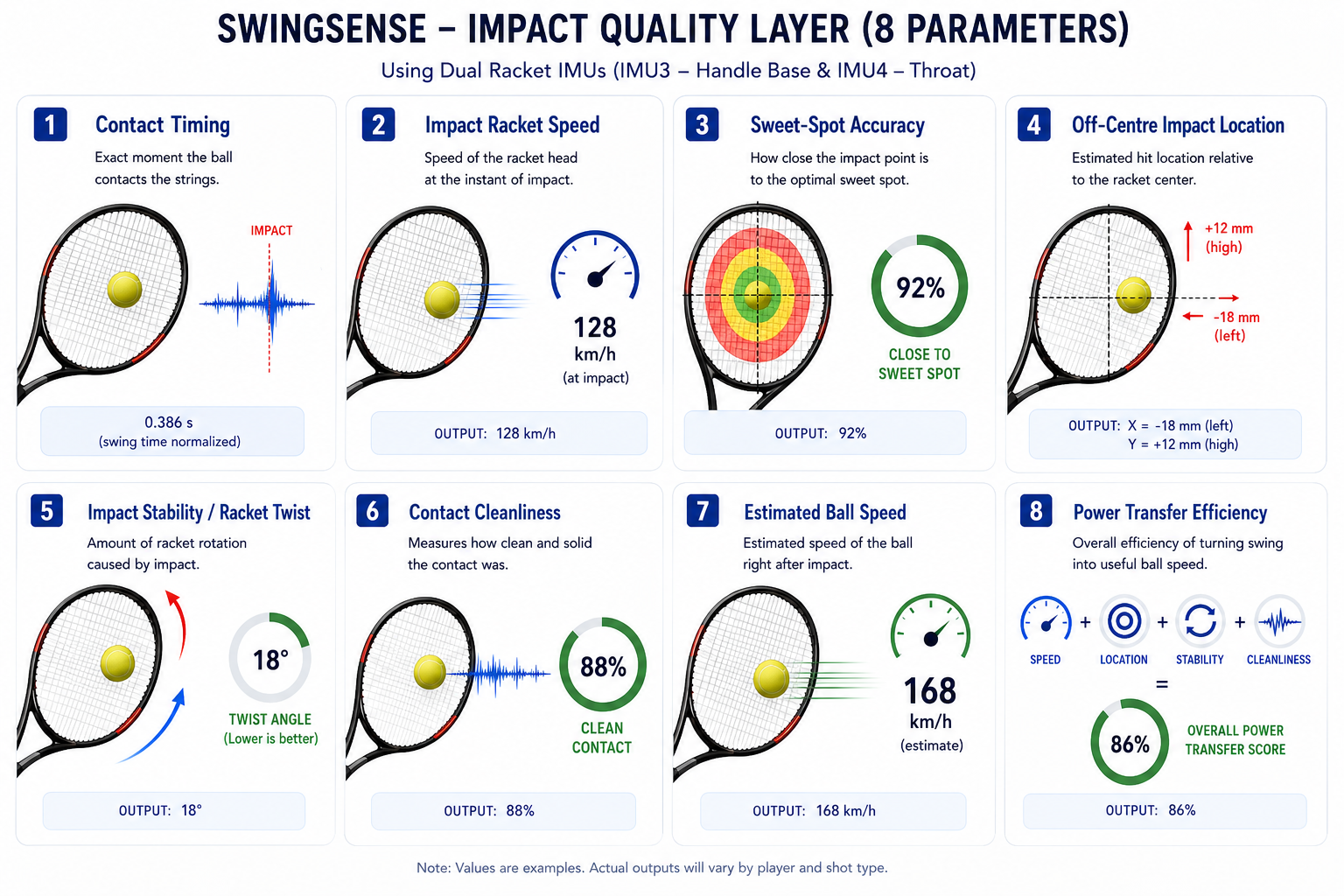
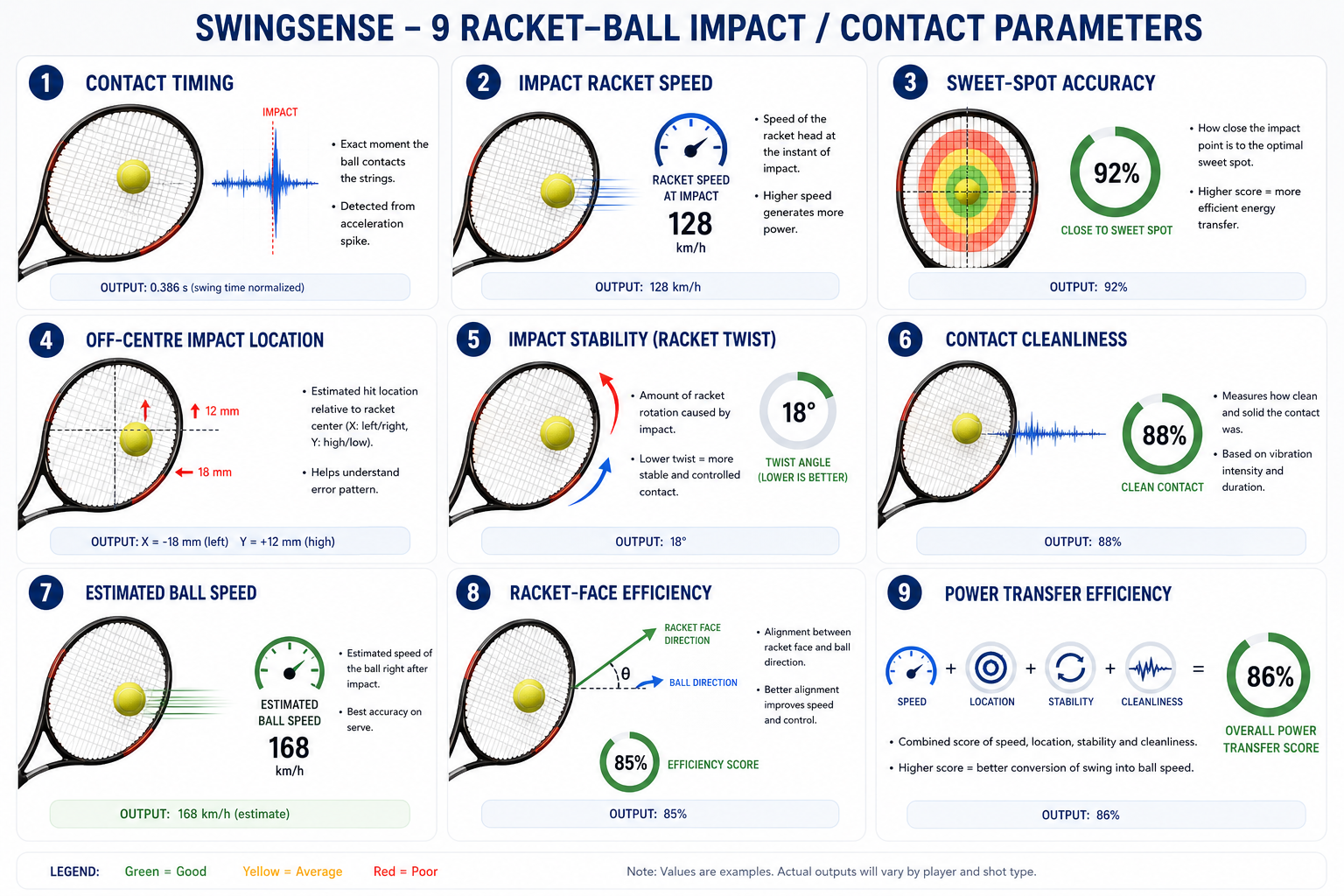
Development note: these names describe the current SwingFlux analysis framework shown in the supplied product material. Exact calculation methods, units, thresholds and product-specific validity/reliability should be documented from final system testing before they are presented as validated commercial performance claims.