
Biomechanical estimation of tennis serve using inertial sensors: a case study
Explored on-court IMU-based biomechanical data collection for the tennis serve and practitioner feedback.
View DOI →SCIENCE
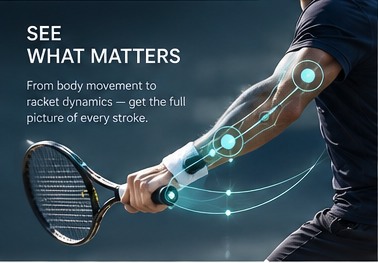
Research supports the wider use of biomechanics and inertial sensing in sport and tennis. SwingFlux separates that scientific context from product-specific validation.
RESEARCH CONTEXT
Published work has explored inertial sensors for tennis serve and forehand kinematics and, more broadly, field-based sports performance measurement. Those studies motivate the approach; they do not by themselves validate a SwingFlux output.
Explored on-court IMU-based biomechanical data collection for the tennis serve and practitioner feedback.
View DOI →Used inertial sensing to quantify hand and upper-limb kinematics during the forehand.
A systematic review of wearable inertial sensing for field-based sport performance evaluation.
View DOI →VALIDATION ROADMAP
Compare relevant outputs against appropriate reference systems and documented protocols.
Quantify within-session and between-session reliability under realistic tennis conditions.
Test whether outputs are understandable, actionable and useful within real coaching workflows.
Validate hardware, synchronization and data acquisition across representative on-court sessions.